

Free public seminar highlights community-based cancer care, emotional wellbeing and practical support for patients, families and carers.
Lancashire charities, NHS representatives and community organisations have reaffirmed their commitment to supporting people affected by cancer, delivering a powerful message of hope and reassurance: “You are not alone. We are always there to help and support you throughout your cancer journey.”
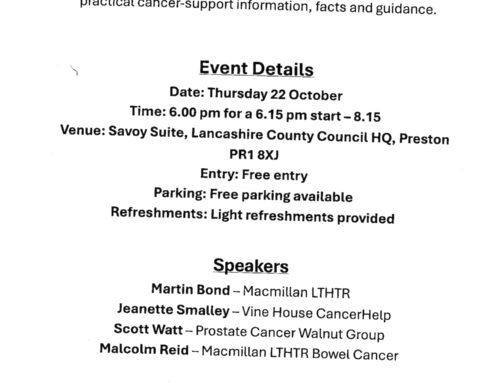
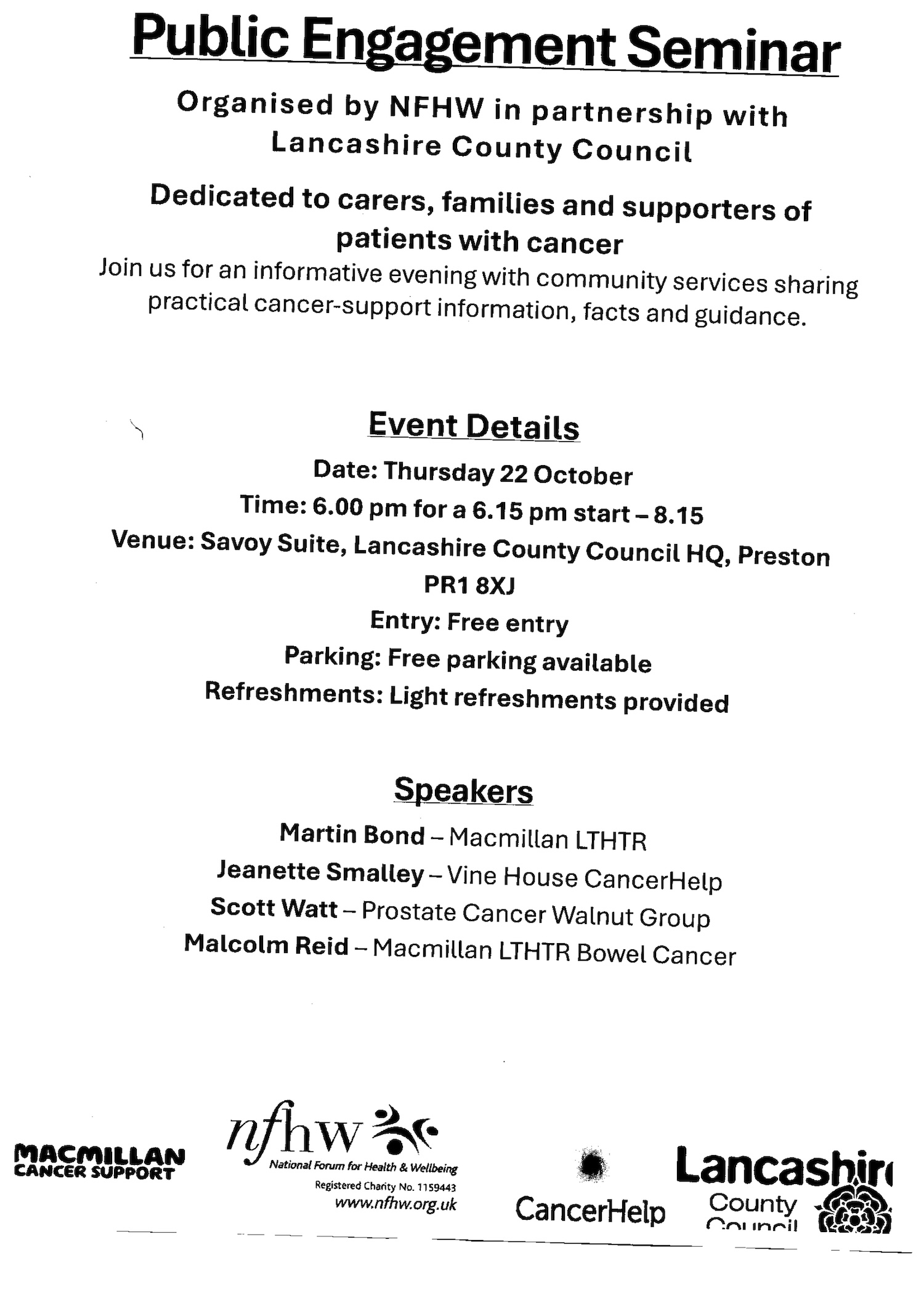
The message was at the heart of ‘Hope Beyond Hospital: Cancer Care in the Community’, a free public engagement seminar organised by the National Forum for Health and Wellbeing (NFHW), in partnership with Lancashire County Council, on Thursday, 22 October 2026, at Lancashire County Council Headquarters in Preston. The event formed part of the series of activities celebrating NFHW’s Silver Jubilee.
The seminar brought together representatives from NHS services and local charities to highlight the vital role of community-based support in helping people navigate the emotional, practical and personal challenges associated with cancer.
Bringing care and support into the community
The event began with a welcome from Russel Hogarth, Community Engagement Officer at NFHW, who thanked Dr Sakthi Karunanithi, Director of Public Health, Lancashire and Lancashire County Council for hosting the seminar. Professor Romesh Gupta, Chairman of NFHW, welcomed the participants and invited Dr. Karunanithi to chair the session. Dr. Karunanithi then introduced the speakers.
Martin Bond, representing Macmillan at Lancashire Teaching Hospitals NHS Foundation Trust (LTHTR), opened the presentations by outlining the work of the Macmillan Cancer Information Centre at Royal Preston Hospital.
He explained how the centre works alongside clinical teams to provide information, guidance and a welcoming environment where people affected by cancer can discuss their concerns. He also highlighted the weekly Benefits Clinic, delivered in partnership with Citizens Advice, which offers free, confidential advice on benefits, entitlements and form-filling.
The centre’s outreach work extends beyond the hospital, with support available through GP practices and Vine House in Ribbleton. Martin also described open days at Lancashire Teaching Hospitals, which give members of the public opportunities to learn about radiotherapy facilities, meet professionals and ask questions in an informal setting.
Holistic care for patients, families and carers
Jeanette Smalley, speaking on behalf of CancerHelp and Vine House, described the charity’s longstanding commitment to supporting people affected by cancer and bereavement across Central Lancashire. Established in 1989, CancerHelp provides free, confidential support in a welcoming, non-clinical environment.
Its services aim to improve the quality of life of patients, their families and carers, offering assistance from diagnosis through treatment and recovery, as well as end-of-life support where needed.
Jeanette outlined the charity’s holistic approach, which includes counselling, bereavement support, complementary therapies such as massage, aromatherapy and reflexology, peer-support groups, and art, craft and wellbeing activities. Images of Vine House illustrated the welcoming community setting in which many of these services are delivered.
She also outlined plans for 2026 and beyond, including expanding symptom-specific support, reaching underrepresented communities and strengthening partnerships across the sector. She expressed an interest in exploring closer collaboration between CancerHelp and NFHW.
Peer support makes a difference
Baz Howard introduced the work of The Walnut Group, a peer-support network for men affected by prostate cancer. The group provides a friendly and supportive environment where men can share their experiences, discuss concerns and learn from others who understand the challenges of living with cancer.
Meeting monthly at Vine House, the group offers companionship, mutual understanding and reassurance, demonstrating how shared experiences can help people feel less isolated.
Malcolm Reid concluded the presentations by sharing his personal journey and discussing bowel cancer support delivered in partnership with Macmillan and LTHTR. His candid and thoughtful account highlighted the importance of cancer awareness, early detection and the continuing support available to people following diagnosis.
Raising awareness and strengthening partnerships
An interactive question-and-answer session followed the presentations, giving participants the opportunity to seek clarification, exchange views and share personal experiences.
Suggestions were put forward on improving awareness of national cancer screening programmes among different age groups and Black, Asian and minority ethnic (BAME) communities. The discussion underlined the importance of accessible information, inclusive engagement and stronger community links to help people understand the screening opportunities available to them.
A defining feature of the seminar was the spirit of partnership between NHS teams, local charities, people with lived experience and community organisations. Together, their contributions demonstrated that effective cancer care extends beyond clinical treatment to encompass emotional wellbeing, practical assistance, companionship and ongoing support for families and carers.
Hope beyond hospital
The seminar served as a powerful reminder that cancer care does not end at the hospital doors. It continues in community centres, support groups, counselling sessions and the everyday acts of kindness that help patients and their families navigate difficult times.
By bringing together professional expertise, charitable services and lived experience, the event reinforced the importance of working collectively to ensure that no one affected by cancer feels alone.
Dedicated to the carers, families and supporters of people living with cancer, the evening conveyed a clear and reassuring message: there is help, there is support, and there is always hope beyond hospital.
The National Forum for Health and Wellbeing expressed its gratitude to all the speakers and attendees, with particular thanks to event coordinator Ian Smith for his efforts in organising the seminar.
Report by Russell Hogarth and Abhay Vaidya
Images by Mr Ian Smith