On Saturday, 10 October 2026, Professor Robert Campbell delivered a presentation entitled “Improving Access to Health for Hard-to-Reach Communities” at the BIDA National Conference, held in Worsley, Manchester.
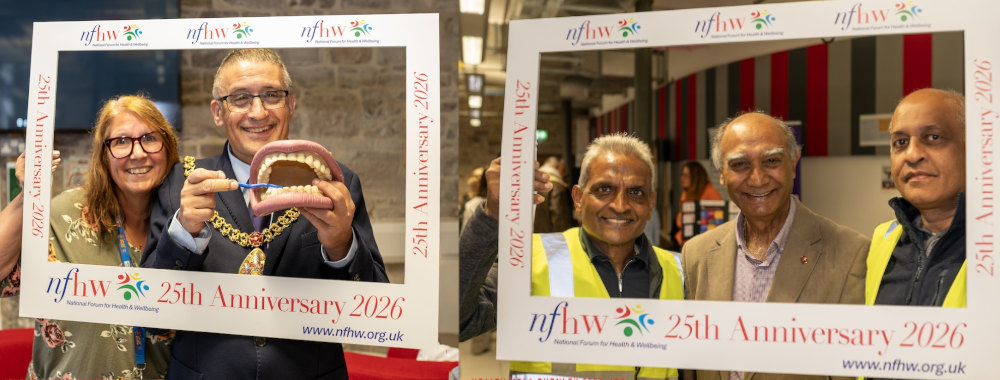
In his presentation, Professor Campbell highlighted the work undertaken by the National Forum for Health and Wellbeing over the past 25 years, emphasising the significant role of Health Melas in promoting access to healthcare, empowering communities, encouraging individuals to recognise their personal health conditions, and taking greater responsibility for managing their own health.
Professor Campbell explained that Health Melas promote healthier lifestyle choices and provide accessible, community-based health information, advice and guidance. They also support individuals in improving their understanding of personal healthcare and taking a more proactive approach to managing their health. Furthermore, the involvement of medical and other healthcare students provides valuable practical experience, helping to prepare future healthcare professionals for their roles in delivering patient-centred care.
Highlighting the achievements of the National Forum for Health and Wellbeing, Professor Campbell reported that, over the past 25 years, the organisation has delivered more than 70 Health Melas in various parts of the United Kingdom and overseas. These initiatives have attracted over 60,000 visitors and facilitated approximately 6,000 health checks. As a result, more than 2,000 individuals were identified as requiring further assessment by their General Practitioners (GPs), demonstrating the important role of Health Melas in identifying potential health concerns and encouraging timely follow-up care.
He further emphasised that these services are delivered in a welcoming, family-friendly and informal community setting. This approach enables healthcare professionals, students and volunteers to work collaboratively while engaging with members of the public in an accessible and supportive environment. Health Melas also provide opportunities for individuals to experience complementary therapies, broadening their exposure to different approaches to health and wellbeing.
Professor Campbell acknowledged that the success and sustainability of these initiatives would not have been possible without the commitment and collaboration of a strong network of partners. Over the years, nearly 25 organisations and partners have contributed to this work. These include the NHS, local councils, educational institutions and universities, medical schools, non-governmental organisations (NGOs), voluntary organisations and dedicated individuals. Their collective contribution has been instrumental in supporting the delivery and development of Health Melas over the years.
In conclusion, Professor Campbell highlighted Health Melas as an effective and inclusive model for improving access to health information, education, advice and guidance among hard-to-reach communities. By engaging individuals in a non-clinical, non-threatening environment, this approach helps to build trust, encourage participation and reduce barriers to accessing healthcare services. He concluded that Health Melas not only improve health awareness and promote informed decision-making but also empower communities to engage more confidently with healthcare providers. By fostering dialogue, collaboration and partnership between communities and health professionals, this model contributes to improving the accessibility, quality and relevance of health information, advice and guidance available to the public.