In this article, Doctors Abha Gupta and Apuy-Rodriguez Fiorella offer some helpful advice on the risks that diabetes can pose to eye health, and guidance on warning signs, symptoms and the screenings that can play such an important role in minimising the risks.
Authors:
Abha Gupta. MBChB, FRCOphth, FacadMEd. Consultant Ophthalmic Surgeon, Manchester Royal Eye Hospital, Manchester University NHS Foundation Trust. Senior Examiner and lead for International Duke Elder exam, The Royal College of Ophthalmologists, 18 Stephenson Way, London, NW1 2HD. Honorary Senior Lecturer (Teaching & Research), University of Manchester.
Apuy-Rodriguez Fiorella. MD, Ophthalmology Resident, Universidad de Costa Rica / Hospital San Juan de Dios. Costa Rica. GMC Registered.

Diabetes is a condition that causes blood sugar levels to become too high due to a problem with insulin, the hormone responsible for regulating blood sugar levels.
There are two main types of diabetes. Type 1 diabetes occurs when the body stops producing insulin. It often develops during childhood or young adulthood, although it can occur at any age. Type 2 diabetes occurs when the body does not use insulin effectively and, eventually, may not produce enough insulin. It is more common in adults, but it can also affect younger people.
Over time, high sugar levels can damage blood vessels and nerves throughout the body, including those in the eyes. This can lead to several eye problems and may affect vision if left untreated. Eye problems may develop before any noticeable changes in vision, making regular diabetic eye screening and eye examinations important.
How Can Diabetes Affect the Eyes?
Surface of the eye: Diabetes can cause severe dry eye symptoms, such as pain, discomfort and a feeling that something is in the eye. It can also reduce sensation in the eye, which may decrease the ability to protect itself. This can increase the risk of eye infections and injuries and may also delay healing.
Lens: People with diabetes have a higher risk of developing cataracts, often at a younger age. Cataracts occur when the natural lens of the eye becomes cloudy. Diabetes can also increase the risk of complications after cataract surgery, and recovery may sometimes be slower. Therefore, attending regular follow-up appointments after cataract surgery is important.
Retina: The retina is the light-sensitive tissue at the back of the eye that helps your brain form images. Diabetes can damage the tiny blood vessels in the retina, causing diabetic retinopathy. When the macula, the central part of the retina responsible for detailed vision, is affected, this is referred to as diabetic maculopathy.
Early diabetic retinopathy may cause no symptoms or noticeable changes in vision. As the disease progresses, it can lead to an accumulation of fluid in the macula (diabetic macular oedema), bleeding inside the eye from abnormal blood vessels (vitreous haemorrhage), and scar tissue formation, which can pull on the retina and cause a retinal detachment and significant sight loss.
Prevention and Treatment
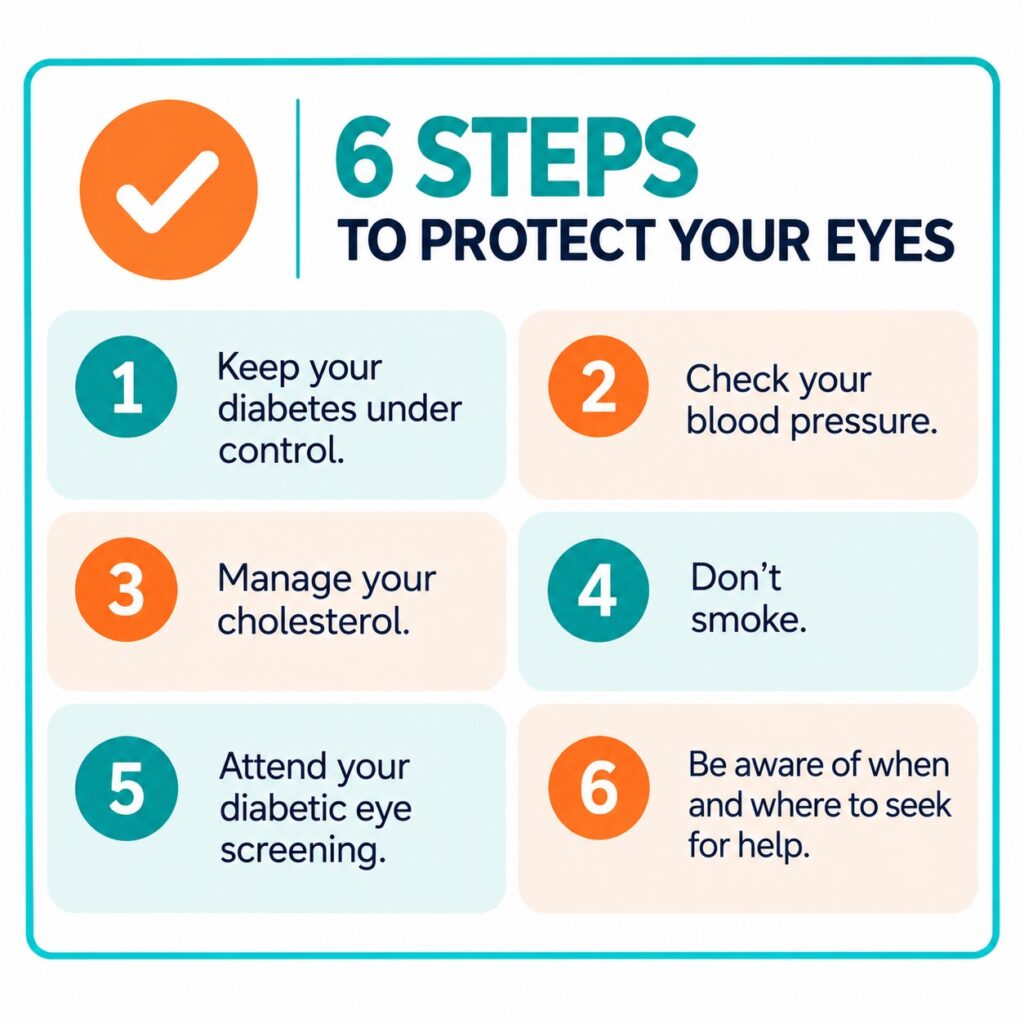
- Regular eye screening and eye examinations are important for detecting diabetic eye disease early and reducing the risk of vision loss.
- Maintaining good control of blood glucose, blood pressure and cholesterol can help reduce the risk of complications.
- Smoking can worsen diabetic eye disease, so stopping smoking is strongly recommended.
- A healthy diet, regular physical activity and maintaining a healthy weight can also support overall health.
Some people with diabetic retinopathy may only need regular monitoring. In more advanced stages, treatment may include laser treatment to the retina, injections of medication into the eye, or surgery.
Diabetic Eye Screening Programme
A diabetic eye screening is not the same as a regular eye test.
The NHS Diabetic Eye Screening Programme focuses on detecting diabetic retinopathy and changes affecting the macula at an early stage, before they cause noticeable changes in the vision. Routine eye examinations with an optometrist are also important for detecting other eye conditions that are not the main focus of diabetic eye screening. Both types of examination may therefore be required.
Who Should Get Screened?
People aged 12 and over with diabetes are usually invited for diabetic eye screening. Screening is usually offered every 1 or 2 years, depending on previous screening results.
During screening, visual acuity is assessed using a letter chart. Eye drops are then used to dilate the pupils, allowing a specialist camera to take photographs of the back of the eyes. The images are later assessed by a trained healthcare professional for signs of diabetes-related changes. Screening results are usually sent within 3 weeks of the appointment.
If no diabetes-related changes are found, the next screening may be scheduled in 1 to 2 years. If small diabetes-related changes are found but vision is not affected, the next screening may be scheduled in 1 year or earlier. More significant changes may require a referral to an eye specialist for further assessment and treatment.
Find diabetic eye screening services: https://www.nhs.uk/service-search/other-health-services/diabetic-eye-screening
When to Seek Help
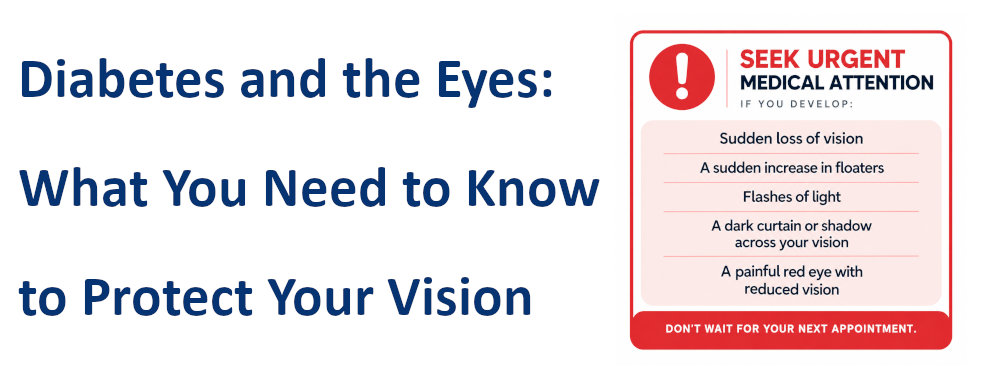
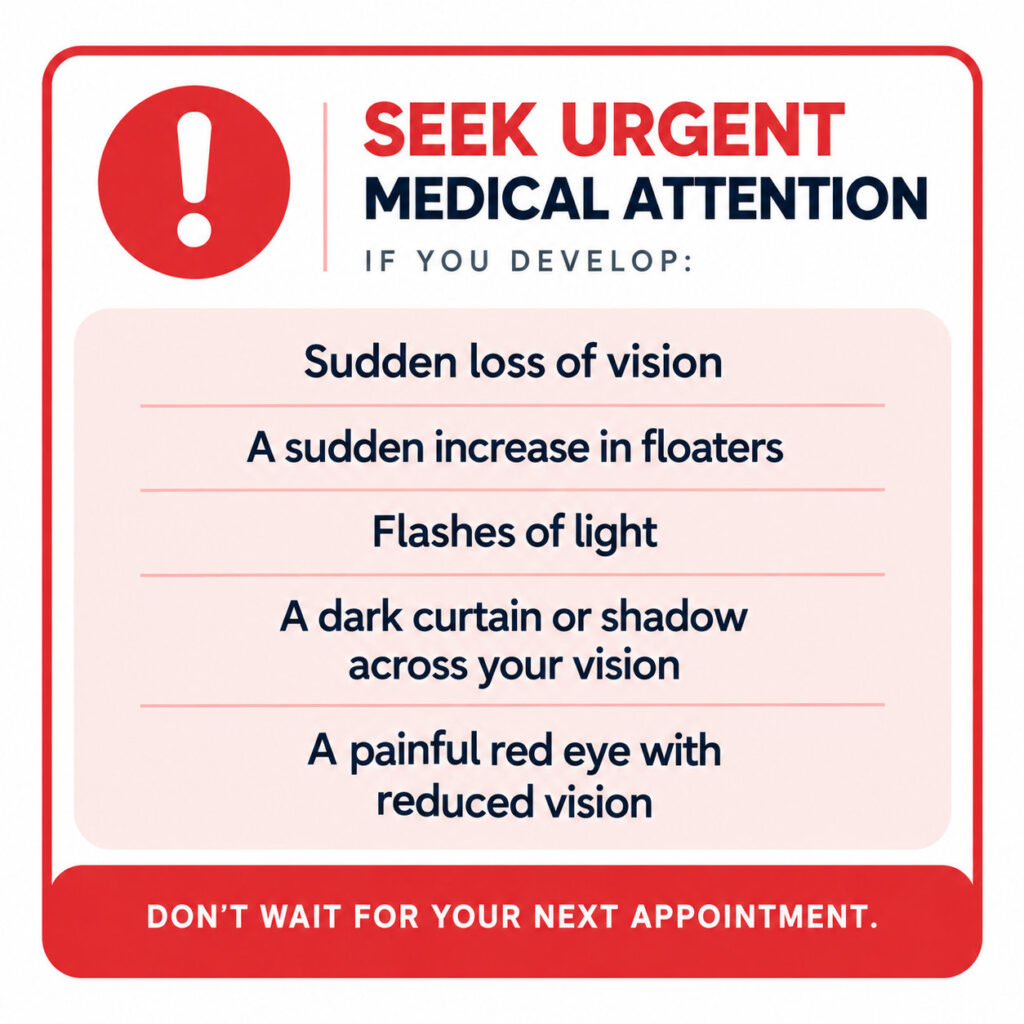
Gradual or progressive changes in vision should be assessed by an optometrist. Sudden or severe changes in vision require urgent assessment in the A&E department. Warning symptoms are shown in the accompanying image.
Remember to attend both diabetic eye screening appointments and regular eye examinations with an optometrist.
References
1. NHS. Diabetic eye screening [Internet]. London: NHS; 2024 [cited 2026 Sep 19]. Available from: https://www.nhs.uk/tests-and-treatments/diabetic-eye-screening/
2. NHS. Diabetic retinopathy [Internet]. London: NHS; 2025 [cited 2026 Sep 19]. Available from: https://www.nhs.uk/conditions/diabetic-retinopathy/
3. NHS England. Diabetic eye screening: programme overview [Internet]. GOV.UK; 2026 May 18 [cited 2026 Sep 19]. Available from: https://www.gov.uk/guidance/diabetic-eye-screening-programme-overview
4. Diabetes UK. Diabetic retinopathy – diabetes and eye problems [Internet]. London: Diabetes UK; 2026 [cited 2026 Sep 19]. Available from: https://www.diabetes.org.uk/about-diabetes/looking-after-diabetes/complications/retinopathy